Soil Health as the Foundation of Regenerative Farming
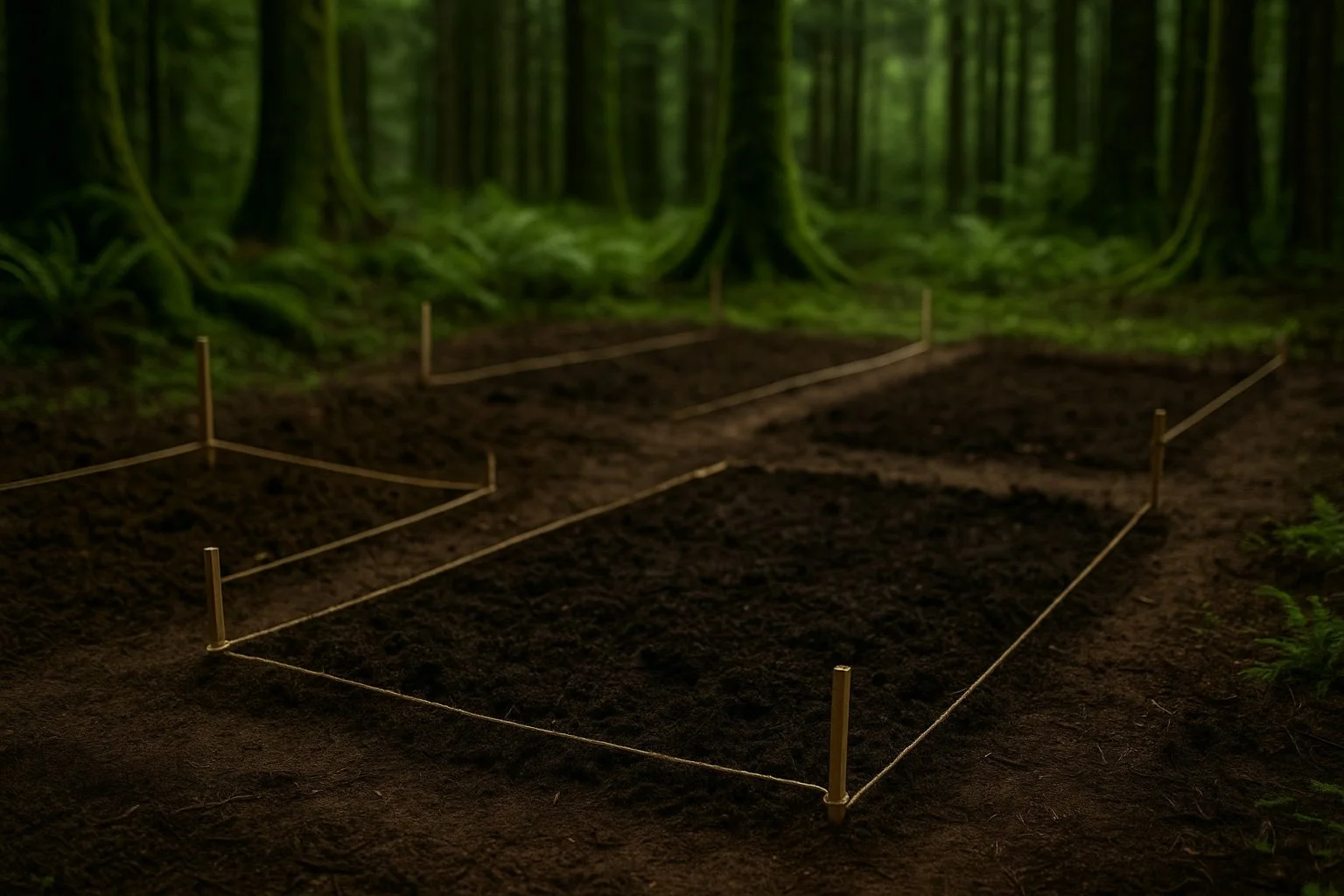
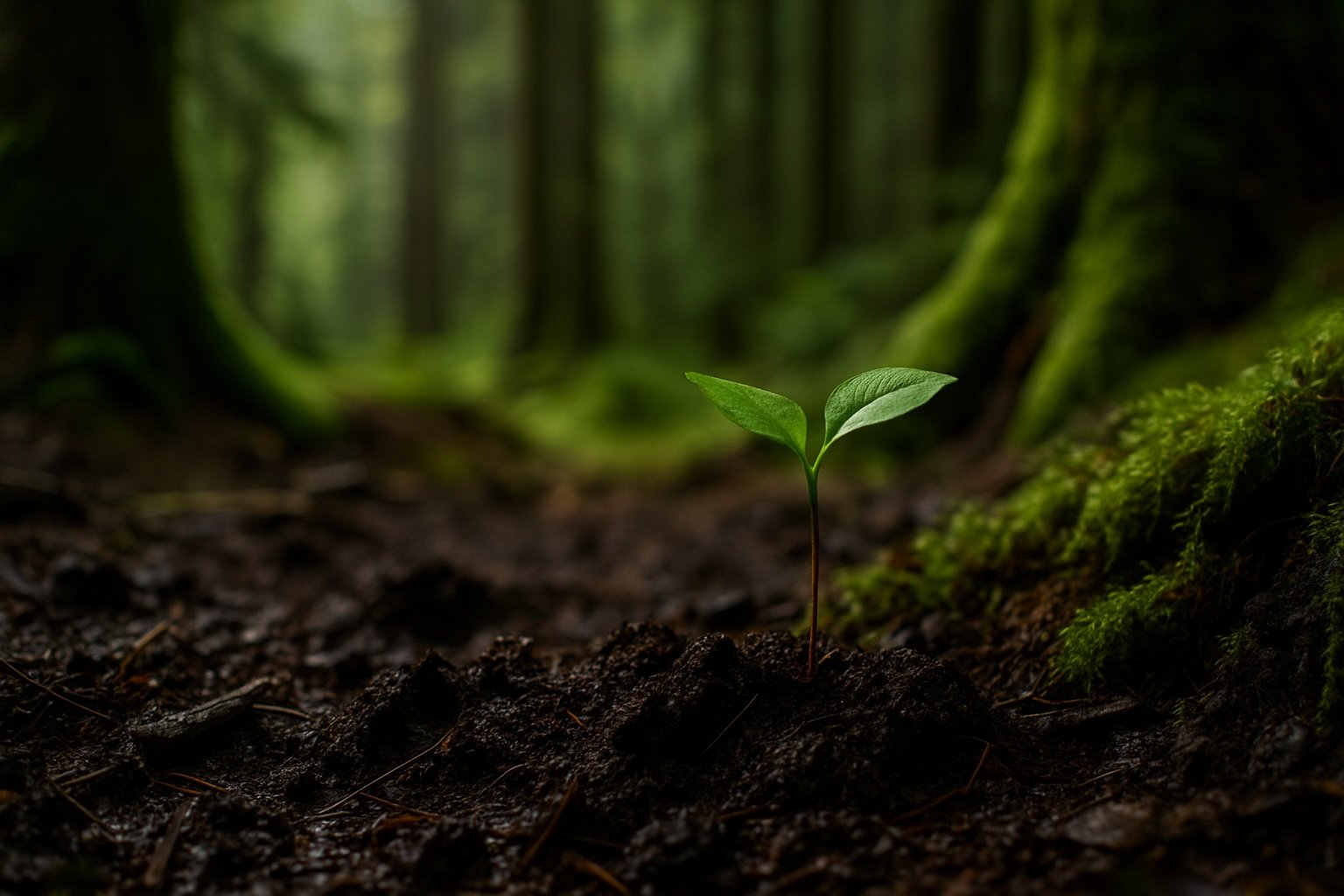
Our farm is a living laboratory for testing how humic acid transforms soil.
We study how humic acid improves the land by comparing soil before and after treatment.
What We Study
How soil structure changes with humic acid
How water retention and aeration improve
How microbial life and root development respond
How these changes support healthier crops
Why It Matters
This work helps us create data-driven, natural, and sustainable soil solutions for farmers, gardeners, and land stewards.
Our Vision
Healthier soil → stronger plants → resilient ecosystems → a regenerative future.
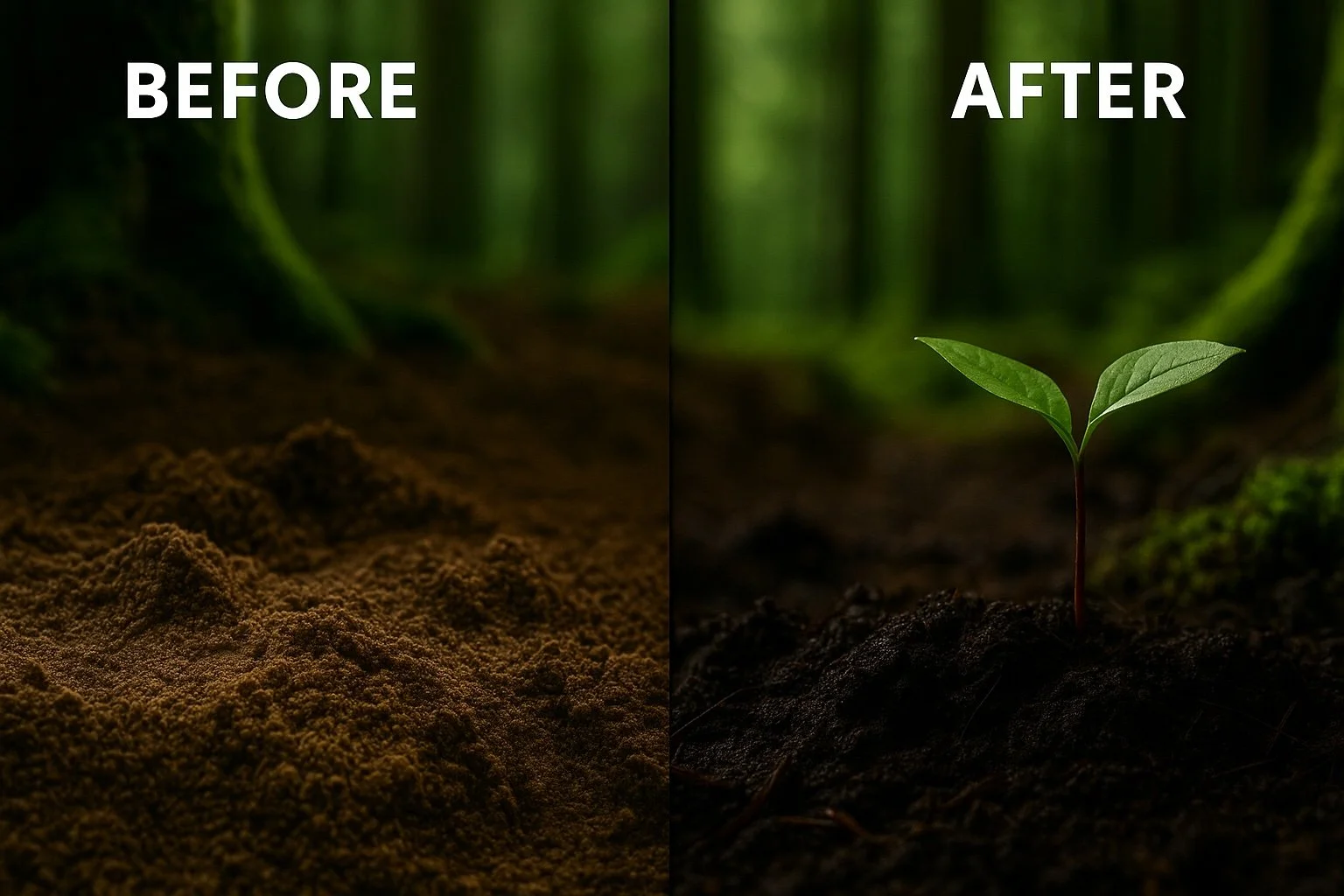
Before humic acid treatment
After 8 weeks of treatment
How Humic Acid Transforms Soil Over Time
Real-world before & after results from our regenerative farm.
We conduct controlled experiments to observe how humic acid changes the soil over time.
By comparing soil samples before treatment and after several weeks, we document improvements in:
Soil structure and porosity
Moisture retention and aeration
Root growth and microbial activity
Overall soil vitality and resilience
These experiments help us create evidence-based, natural solutions for farmers and gardeners seeking healthier, regenerative soil systems.
Our Forks Experimental Farm — A Living Laboratory
Where rain, forest soil, and real-world field tests shape our understanding of regenerative farming.
At Muddy Wild Eco-Retreat, our farm in Forks is more than a place to grow crops —
it is a real-world testing ground for understanding how humic acid improves soil health.
Located in one of the wettest regions in the United States, our land provides the ideal environment to study:
Soil moisture retention in high-rainfall ecosystems
Changes in soil structure and porosity
Root development and microbial activity
How humic acid helps create stronger, healthier plants
This on-site experimental farm allows us to generate credible, nature-based data that supports regenerative agriculture — not in theory, but through ongoing field observations on our own land.
Our goal is to create a model farm where science, ecology, and real-world practice come together.